
The Hardest Part About Asking for Help
by Meghan Sonder
Many people think that admitting you have a problem is the hardest part of solving your problem. This is a misguided notion. The hardest part is actually asking for help.
I knew something was very wrong long before I asked for help, but I was in denial. I didn’t want to believe that I actually had a problem even though it was becoming more and more evident by the day. This was only the first obstacle to getting the help I needed to begin healing.
Here, I will break down the many reasons people do not ask for help, and how I overcame each one.
- Denial: First and foremost, I did not want to admit that anything was wrong with me. I went through a lot growing up, but I came out stronger. Admitting that my past caused the issues I was having was like admitting a weakness I did not want to see in myself. I believed my own lies for years until I could no longer ignore the issues.
- The depression became deeper, and the nightmares became more vivid. I found myself refusing to sleep unless exhausted, which only exacerbated the problem. Finally, I found myself crying in my car while driving down the road, considering ways to end my life. It was then that I had to let go of my denial and face the problem head-on.
- I was forced to recognize that considering self-harm and suicide were not normal things to think, and this is what made me seek out the help I needed.
- You perceive it as weakness: This is not necessarily the perception of those around you, but take it from me. I perceived my need for help as weakness. I had been strong for so many years. I had gotten myself out of abuse at 14 years old! How could I suddenly be so weak?
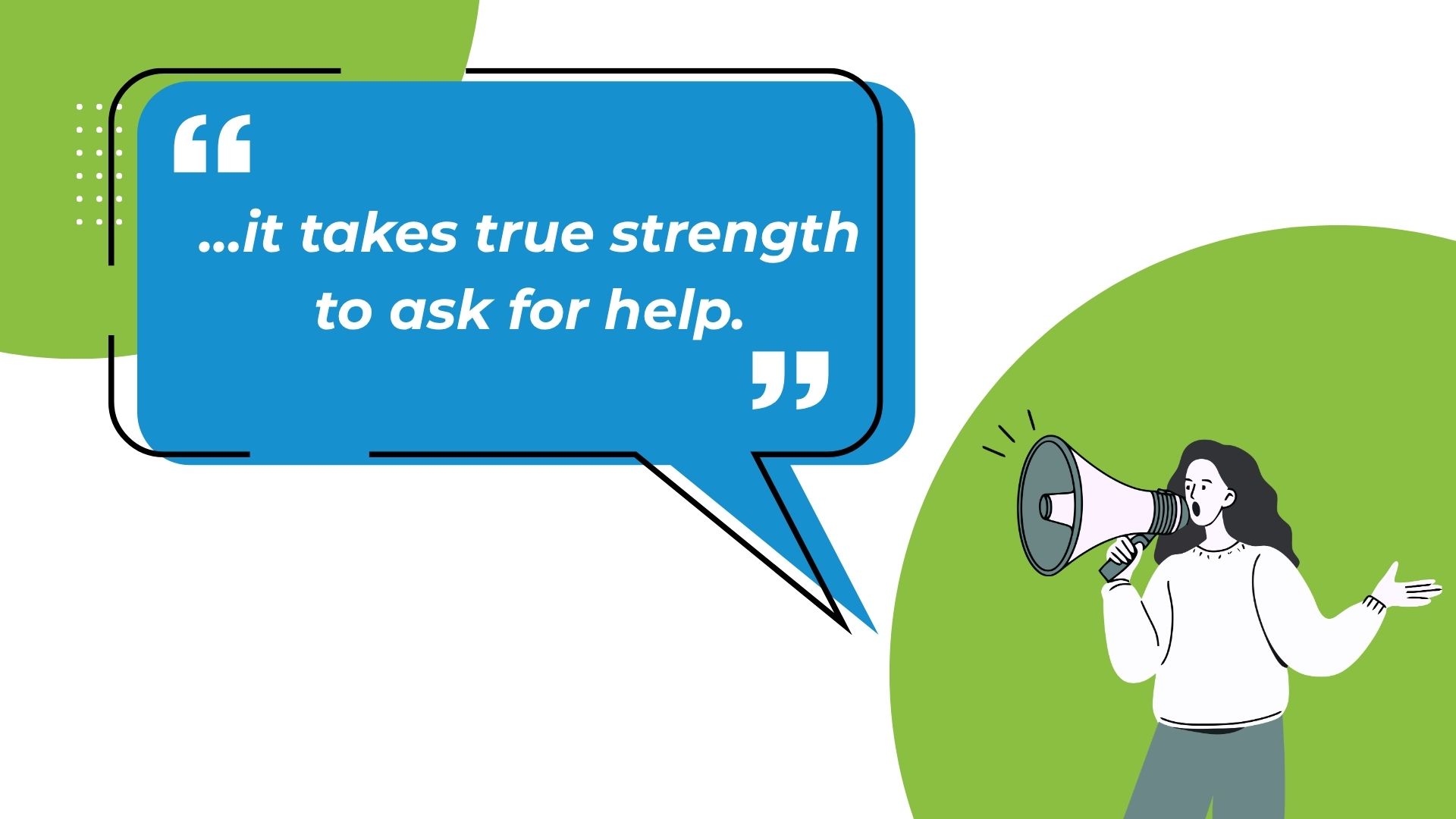
- Trust me when I say that getting help is far from weak; no matter what you tell yourself, it takes true strength to ask for help. It takes courage to allow yourself to break in front of someone and tell them there is something you need help with.
- This realization dawned on me over an extended period of time. I hated myself for breaking, for crying in front of anyone (including my therapist). Through time, I realized that I was being strong even though I had cried in front of others, that asking for help was my purest show of strength because I was able to admit the issue and take the necessary steps to heal.
- You worry about how others will perceive you: This is probably the scariest one of all. Mental health and mental health care used to come with a lot of stigma attached to it. Even as a child in the 90s, my mother called me crazy on more than one occasion for being medicated. It is difficult to adjust to the destigmatization of mental health even though it is widespread now, especially if you were born before the new millennium.
The truth is that mental health is viewed today as a completely normal health concern to stay on top of and should be treated as such, especially by those receiving care. You are not crazy; nothing is wrong with you; you just need a little help coping with life. The simplest truth is that life is not easy and everyone could benefit from regular therapy.
While these are the main reasons a person may not reach out, it is far from an exhaustive list. You may have your own very different reasons, but whatever those reasons may be, do not let them prevent you from reaching out and asking for help.
There is nothing shameful about needing someone else to help carry the burden with you.
From HealthWest: If you or someone you know is in a Mental Health Crisis, our warmline is available 24 hours a day, 7 days a week: 231-722-HELP (4357).